Why Self-Awareness is the Number 1 Skill for Coaches

Woman Looking at Sunset — Reno, NV — E3A Equine Experiential

As coaches and equine-assisted learning (EAL) facilitators we teach our clients the importance of self-awareness. It is a core principle of effective leadership and self-improvement. But do we ever stop to examine our own self-awareness?

We set out to ‘make a difference’ in the world but the onus is on us to ‘be the difference’ by becoming more self-aware ourselves. This blog explores how horses can support us to do that.

What is self-awareness?

The first question we need to ask ourselves is what does it mean to be ‘self-aware’?

Self-awareness means the ability to see yourself more clearly and honestly. According to a recent article in Harvard Business Review1, there are two types of self-awareness. Researchers at The Eurich Group, led by Tasha Eurich, carried out a study into self-awareness, analysing nearly 800 scientific studies.

They identified self-awareness as:

Internal self-awareness – This is about how we see ourselves in relation to our values, reactions, aspirations, impact on others and place in society.

External self-awareness – This relates to our understanding of how other people see us. A greater external self-awareness is associated with increased empathy and the ability to see things from the perspective of others.

The researchers point out that both types are crucial for effective leadership and, as coaches, it’s important that we strive to cultivate both. So, the next question is how can we do that most effectively?

The role of equine-assisted learning

While many of us tend to be pretty adept at internal self-awareness, as coaches and EAL facilitators it can be harder to build a clear picture of our external self-awareness (how we are perceived by others, including our own partners, our horses). This is where horses can be so valuable as they give us unbiased, real-time, objective feedback which may be harder to elicit from the people in our lives. Horses are perceptive. They are clear. They don’t lie. If we want to understand more about our external self-awareness, doing our own work with our horses can be a huge advantage.

Why is self-awareness important for coaches?

Self-awareness is important for everyone not just coaches, but if you are coaching others in leadership roles or personal development, your own self-awareness is crucial. It enables us you to build good relationships with clients and avoid unconscious triggering. Being able to see yourself clearly helps you make better decisions, build stronger relationships, communicate more effectively. It enhances confidence and creativity and supports you to become a better coach and role model.

Discover how to increase your self-awareness with horses

The E3A 2021 conference – The Next Frontier – brings together some of the world’s leading authorities in equine-assisted learning for an inspiring three-day program. It is taking place both face-to-face on our Arizona ranch and online and will consider the topics of Awareness (including self-awareness), Alignment and Action.

Among our keynote speakers are:

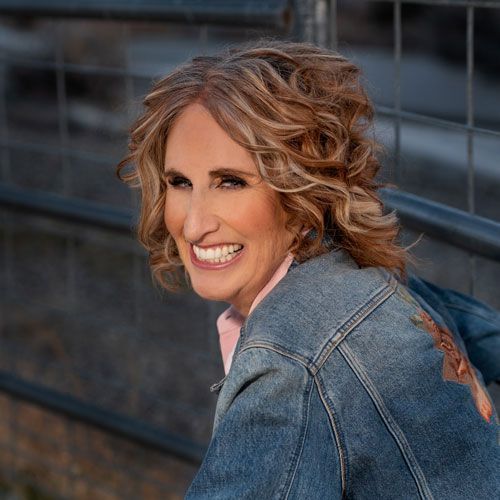
Jennifer Kaplan — Reno, NV — E3A Equine Experiential

Jennifer Kaplan, a partner at Equinemity in Reno, Nevada. Jennifer brings her experience of teaching leadership and psychology at the collegiate level into her work as an E3A Master Trainer, offering certification and enrichment courses in Equine Experiential Education.


In her talk about Interdependence, she will consider the issue of Awareness, talking about how important it is to incorporate the healthy interdependent dynamics of the herd into our work in the EAL arena. She will discuss why self-awareness, support and trust are crucial for an EAL facilitator’s mindset.

Merrill Morse — Reno, NV — E3A Equine Experiential

Merrill Morse, a certified E3A (Equine Experiential Education) Leadership Coaching Professional since 2016. Merrill’s lifelong experience learning from, and with, horses led her to create Merill Morse Equicoaching, so that horses could help teach people about themselves, just as they had done for her. The process of developing a program to help others succeed led her from London to the Middle East, and down many research paths. Her passions for Leadership Development and its impact on organizations and communities in Global Cultures, and Women’s Leadership are the foundation of her Equicoaching practice.


Merrill’s exhibition A Facilitator’s Horsemanship explores the issue of Alignment, including how using natural horsemanship techniques (at liberty, in-hand and under saddle) during facilitation helps improve interactions and provide more profound outcomes for clients.

Lissa Pohl — Reno, NV — E3A Equine Experiential

Lissa Pohl, Chief Engagement Officer at EnQ Coaching and a global expert in somatic intelligence and engagement. Lissa’s work embraces several innovative learning modalities, including Equine Assisted Learning (EAL), Lights On Leadership™ Coaching, and The Leadership Circle 360 Profile. These provide leaders with the heightened perceptual awareness and feedback they need to fully engage, inspire and lead their organizations.


In her talk on Horses and Versatility, Lissa pulls together the topics of Awareness and Alignment in a compelling call to Action. She considers how working with horses encourages us to step into and leverage both our positive feminine and masculine energies. By becoming comfortable expressing both types of strength, regardless of your gender, you can strengthen your interpersonal skills and deepen your self-awareness.

December 26, 2025
When Lisa Bowman first experienced the healing power of horses, she knew her life was about to change. What she didn’t realize at the time was just how many other lives those horses would go on to touch through her work. Lisa launched Hope for Hearts Farm in 2013 with a vision to help people grow, heal, and transform through connection with horses. “I personally experienced the healing power of horses and felt led to share that with others,” she says. “Going through E3A’s certification gave me the confidence and tools to assist clients to greater levels of transformation.” She became an E3A Level 1 Certified Practitioner in 2018, followed by Advanced Level 2 certification in Corporate Facilitation in 2021. Empowering Change Through Connection At Hope for Hearts Farm, Lisa offers two main programs: Personal Development and Well-Being for adults and children (ages 8 and up), and Corporate and Leadership Development, including team-building and executive coaching. Her ideal clients are those willing to embrace the feedback the horses provide and dig deep into their own thoughts, feelings, and belief patterns. “Of course, I also love when someone comes in very skeptical of the process and is blown away by the power of the horse/human relationship and the incredible insights they gain from the horses.” Lisa says. Moments That Matter Lisa’s years as a facilitator are filled with powerful moments of breakthrough and transformation—so many, she says, it’s impossible to choose just one favorite. “Seeing the changes in teams and individuals is incredibly rewarding,” she shares. “There’s nothing like hearing someone say, ‘I keep thinking I’ve got it, but every session with the horses knocks my socks off!’ Or a parent telling me that the experience didn’t just help their child, but their whole family—and that it’s leading to generational change.” She’s also witnessed the impact in the corporate world: “When a team tells us after a workshop that they’ll be forever changed, it reinforces just how effective this work really is.” Lessons from the Arena Looking back on her E3A certification journey, Lisa especially treasures her arena training—now known as the Capstone. “Hands-on experience with the horses, activities, fellow facilitators, and Master Trainers was invaluable,” she says. “It was there I learned to truly be open to outcome and trust the process—something that didn’t come naturally for my Type A personality!” That lesson continues to shape her facilitation style today. “It never ceases to amaze me how the horses show up exactly how each person or team needs,” she says. “When we trust our equine partners and stay open, the experience becomes even more impactful.” Through her partnership with E3A and her herd at Hope for Hearts Farm, Lisa Bowman continues to help people connect, reflect, and grow—one transformative session at a time.
October 21, 2025
For Stacy Gendels, becoming E3A certified in March 2020 marked the beginning of an exciting new chapter—one that arrived just as the world was shutting down.
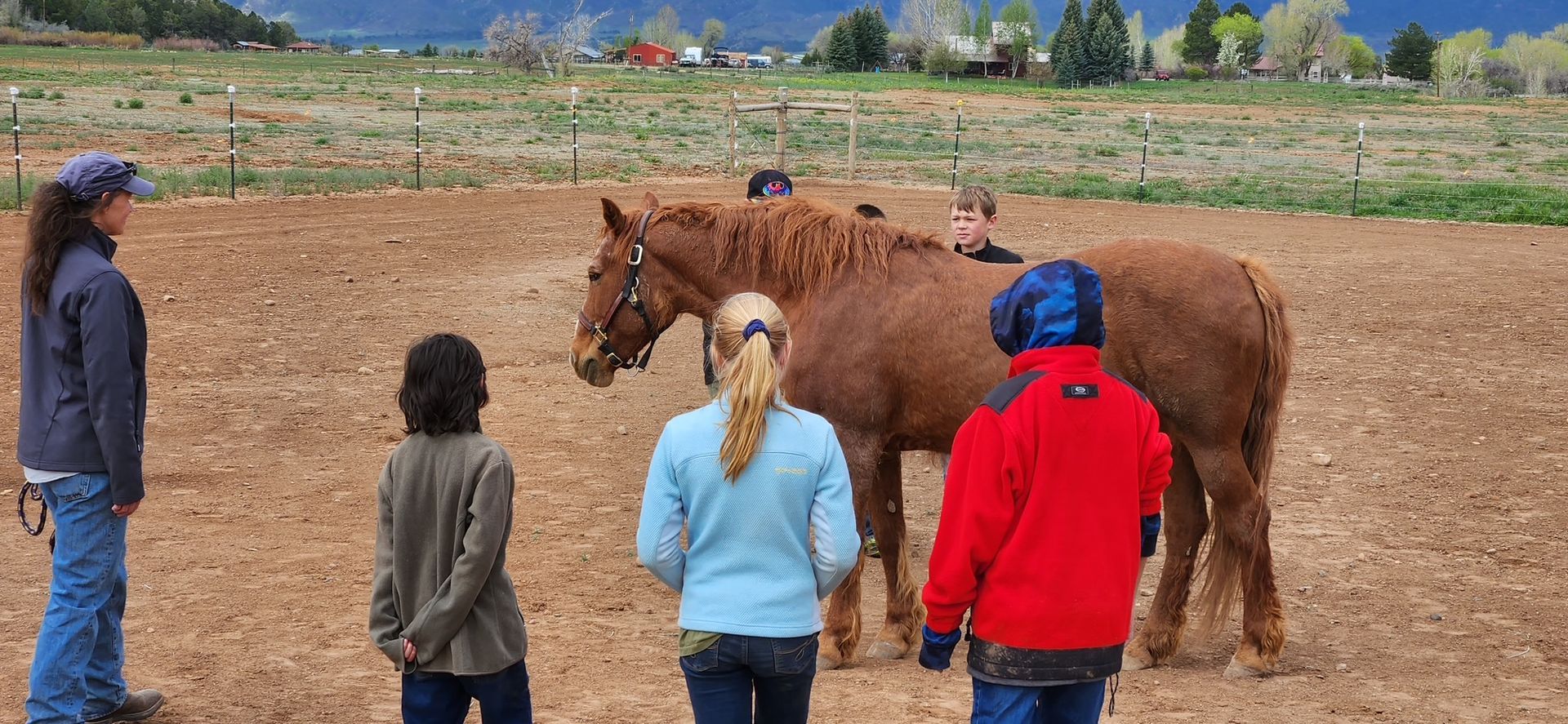
A facilitator and group of participants stand with a brown horse.
September 2, 2025
After three decades as a K-12 school counselor, Karen Finch was ready for retirement—or so she thought. Just one day later, life presented her with an unexpected opportunity. A local equine-assisted learning facility called to ask if she would consider becoming their therapist. Despite having no prior experience with h
MORE POSTS